

When I moved to D.C. right after college in 2006, there wasn’t a single protected bike lane in the entire city. The first one, on 15th Street NW, didn’t show up until 2009, and Capital Bikeshare wouldn’t launch until 2010.
I lived in Dupont Circle and walked or biked almost everywhere. Walking had some challenges, but biking felt like taking your life into your hands. I became involved with the Washington Area Bicyclist Association (WABA) right away, started showing up to ANC meetings, and spent years trying to convince local officials and neighbors that safety for all road users could potentially be more important than private car storage on public streets.
To be honest, a lot of those early years felt like shouting into the void. I made incremental progress here and there, mostly through persistence and rhetorical arguments, until a few big shifts in my life completely changed how I thought about advocacy—and how we actually get things done in this city.
From Crowdsourcing Hazards to Building Community
By day, I’ve spent the last two decades working in data and analytics—leading technical teams evaluating federal Medicare programs at Mathematica Policy Research, standing up analytics stacks at startups, and most recently serving as Director of Data & Analytics at Strategus.
In 2018, that data background collided with my street-safety advocacy. While the current discourse tends to be around e-scooter and Waymo, back then frustration with drivers blocking bike lanes and crosswalks was a real focal point. There was little data to proof the systematic natureof the problem, so my co-founder Daniel Schep and I built OurStreets—a mobile app that let residents crowdsource traffic hazards and blocked bike lanes in real time so advocates and city planners had hard numbers instead of just anecdotes. When COVID-19 hit in early 2020, we pivoted the platform to help neighbors track where essential supplies were in stock across the country, scaling to more than 30,000 users.
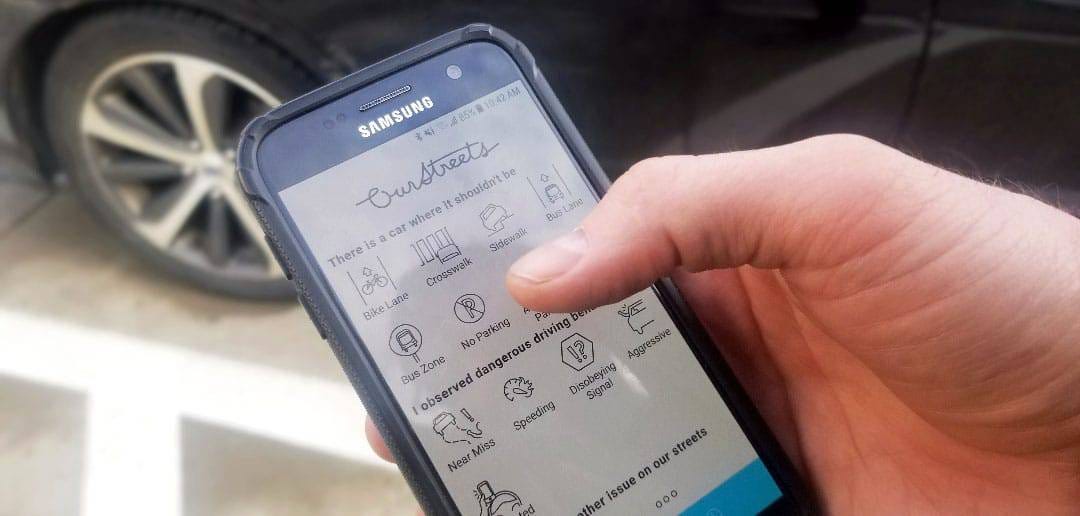
Though we shut the app down in 2020, OurStreets taught me a ton about civic tech and how hard numbers can move a conversation. Then I became a dad, and my perspective shifted all over again.
What Changed When I Started Riding With My Daughter
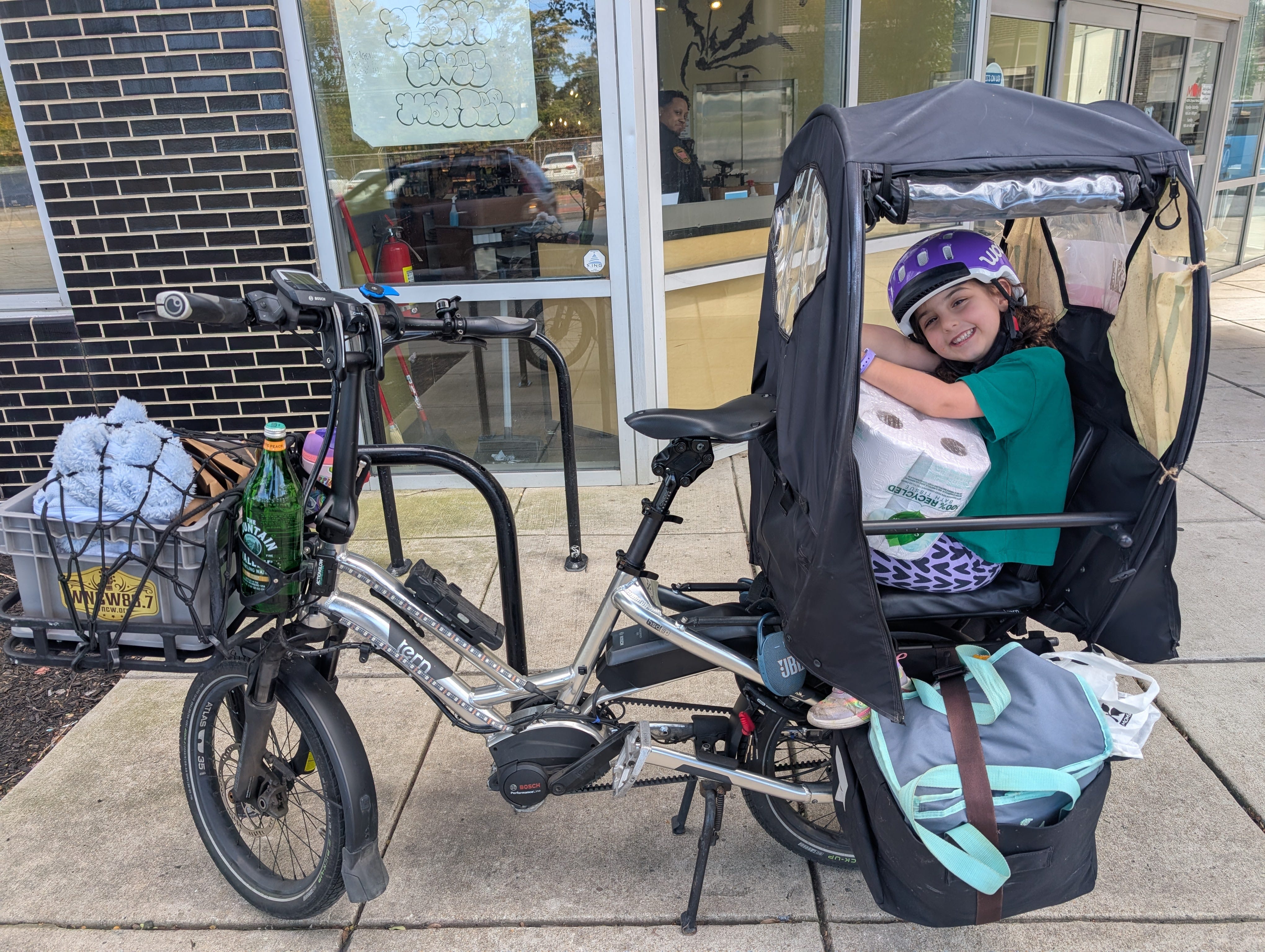
What feels safe as an able-bodied 30-year-old is dramatically different from what works when you’re riding next to a five- or six-year-old on a pedal bike. This perspective hit me in the face hard when my daughter was born in the height of the pandemic in May 2020 and continued to shape my world view as I procured a cargo bike in 2021 and began carting her around everywhere.
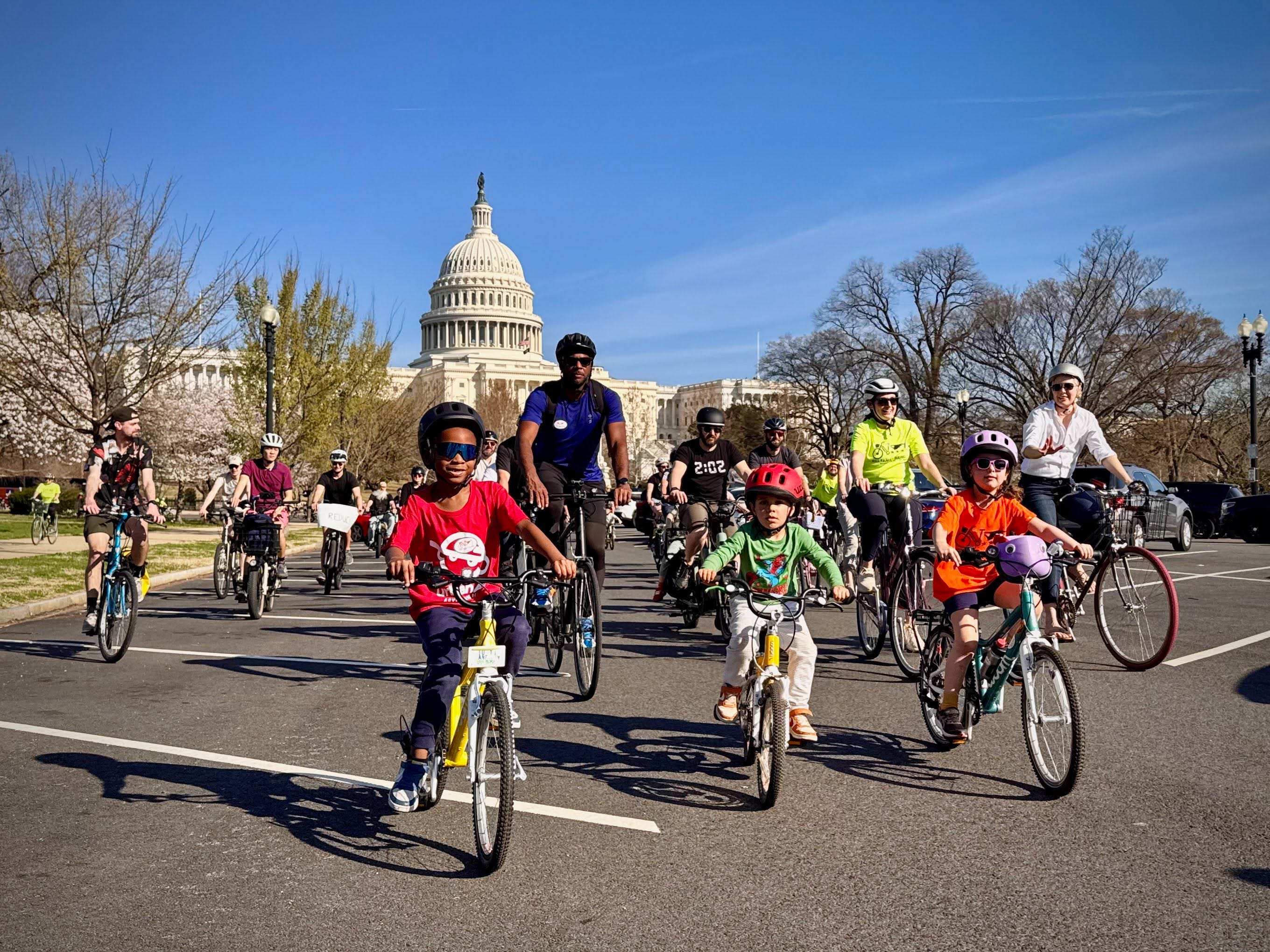
In early 2023, following a bruising neighborhood fight (and an ANC recall effort) over a single missing block of the North Carolina/C Street NE protected bike lane connecting to Lincoln Park, a few friends and neighbors and I decided we needed a different approach to safe-streets organizing. Instead of just testifying at hearings, we wanted to show people—especially families—the joy of getting out of your car and riding bikes together as a family and a community.
So we started Hill Family Biking. What began as a grassroots effort has grown into a 100% volunteer-run 501(c)(3) nonprofit that hosts free, slow-paced, community monthly rides for riders of all ages and abilities. We’ve gone from 250 riders to more than 1,000 neighbors rolling together and success in the advocacy arena including securing $750k for protected bike lanes on the entirety of 11th St SE between Lincoln Park and Navy Yard in collaboration with Councilmember Charles Allen.
New to Substack, Not New to Writing About D.C. Transportation
While I’m new to Substack, I’ve been writing about transportation in D.C. for almost a decade.
It started with my Capstone Project in Georgetown’s graduate Data Science program, where I became the first academic to gain access to D.C.’s dockless bike and scooter data. Writing about those findings for Greater Greater Washington led to me becoming a regular contributor—and I now have 17 bylines to my name to date, covering everything from micromobility and protected bike lanes to bus priority and advice for those new to family biking.
What We’ll Talk About Here
I started this Substack because I want a place to dig into D.C. transportation news and views without the constraints of social media.
Here’s what you can expect from We Talkin’ Transpo?:
D.C. transportation discourse, translated: What’s actually happening with DDOT projects and ANC debates—and you can take action to move the needle.
Data over vibes: Using public datasets (ridership counts, crash numbers, micromobility trips, curb usage) to separate real safety trends from loud anecdotes.
Lessons from grassroots organizing: Candid notes on what works—and what’s an unforced error—when you’re trying to build community movements like Hill Family Biking, civic tech tools like OurStreets or simply get a bike rack on your block.
Getting around D.C. as a family: Practical reflections on raising a kid without defaulting to a car for every trip, from cargo bikes and Capital Bikeshare to navigating sidewalks and neighborhood parks without bathroom access. Yes, public bathrooms are transportation infrastructure (coming soon in a future post).
After 20 years of riding, analyzing, and organizing, I care deeply about making D.C. safer, better connected, and easier to navigate for everyone and hope this Substack will provoke more thought on some topics that usually only elicit a knee-jerk reaction.
Thanks for being here from day one. Let me know what D.C. transportation questions are front of mind right now—I’d love to hear from you.